When Repetition Counts Once
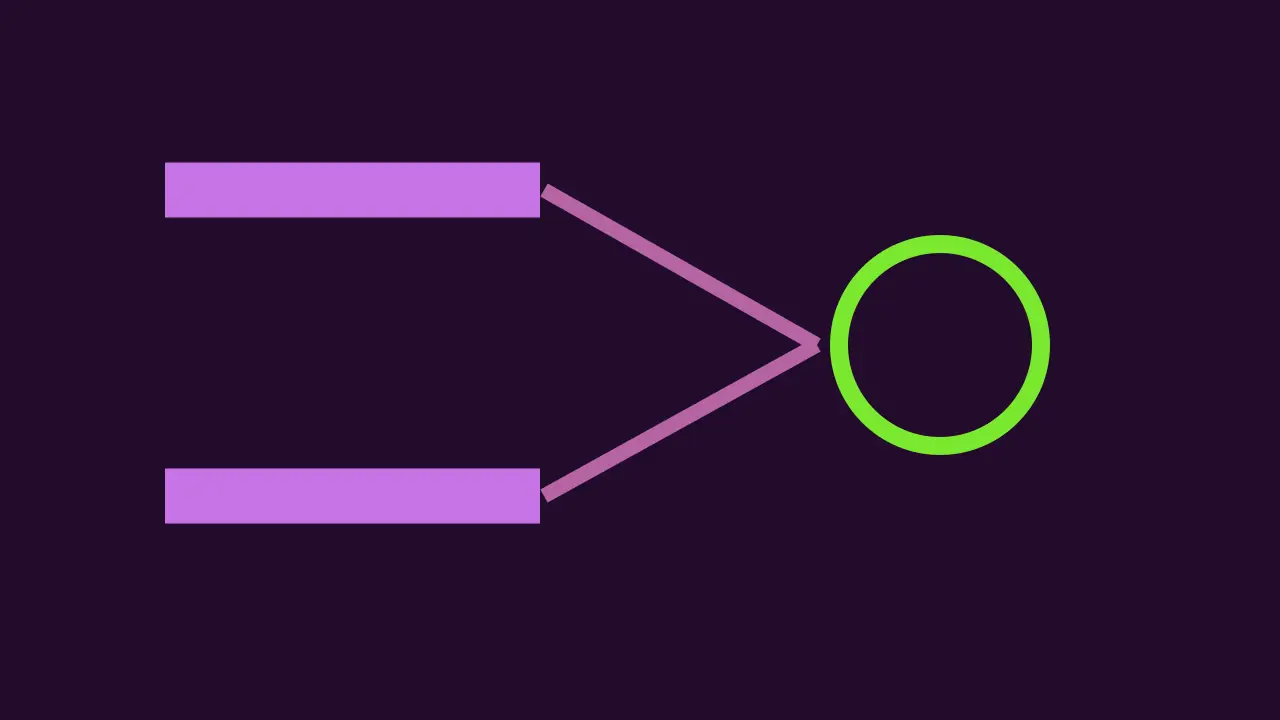
Two fragments of the hall contain the same scrape. The witness interprets the repetition as evidence that they opened the door twice. An early proposal put a mark on the strip every time an account mentioned the sound. This was easy to read, but the second mark suggested a second observation. We changed the strip so a reader can tell how many records they have and how many underlying observations those records might contain.
Trace where each account came from
Open the first fragment and listen from near the casing. The scrape begins a short time before the door reaches its widest point. There is also a close vibration that fades as the door stops. The later fragment starts farther along the same movement. A reader hears what could be the same vibration. In both clips, the witness reports that the sound came from just beyond the edge they could see.
We keep the two fragment references. They allow a reader to review the angles independently. When you select them together, the comparison gives you a separate control for the possibility that both views recover one impression. The control remains available after the clips have been grouped and shows which items the choice concerns. It can be cleared without deleting either account.
Give the group an inspectable reason
In the first interface a filled mark meant that an event had been supported twice. We removed the filled state from any choice driven purely by repetition. The group now displays two links and one provisional relationship, with a brief reason the player can revisit. For this exercise the reason might be the matched vibration and the absence of an independent view of the closing door.
The reader can also keep the observations separate. A possible reason would be a change in the angle that produces a vibration with a different beginning. We test this option with an alternative sound that differs at the point where the hinge starts to move. A labelled choice lets the player explain which part they compared without converting their judgment into a numerical measure.
Practice keeping unrelated sources apart
A mark on the casing can genuinely add information that the repeated sounds do not contain. The shape visible from the corner is independent of how often the sound was recalled. We bring that mark into the review as a separate observation. A reader may conclude that a second fragment shares the same room and still leave open whether it shows a different visit.
The distinction matters when the two types of evidence sit close together on a narrow screen. We give each source an explicit heading and place the group control after the clips rather than among the casing details. The next test asks readers to remove the group and see whether the marked casing remains where they saved it.
Carry a useful result into another visit
The revised prototype gives the current grouping back to the reader when they return to the scene. It keeps the underlying fragment titles so they can open either one. If a new observation supplies a different vibration, the earlier interpretation remains available for comparison. A reconstruction should be easy to correct without pretending that the player never made a different reading.
Return to the doorframe study to see which part of the room can be compared by shape. The current scene in Same Door Twice joins the acoustic and spatial exercises. Its open question is whether a single recalled movement is enough to explain both views. We preserve the question even when a player has reached a useful working answer.