Same Door Twice
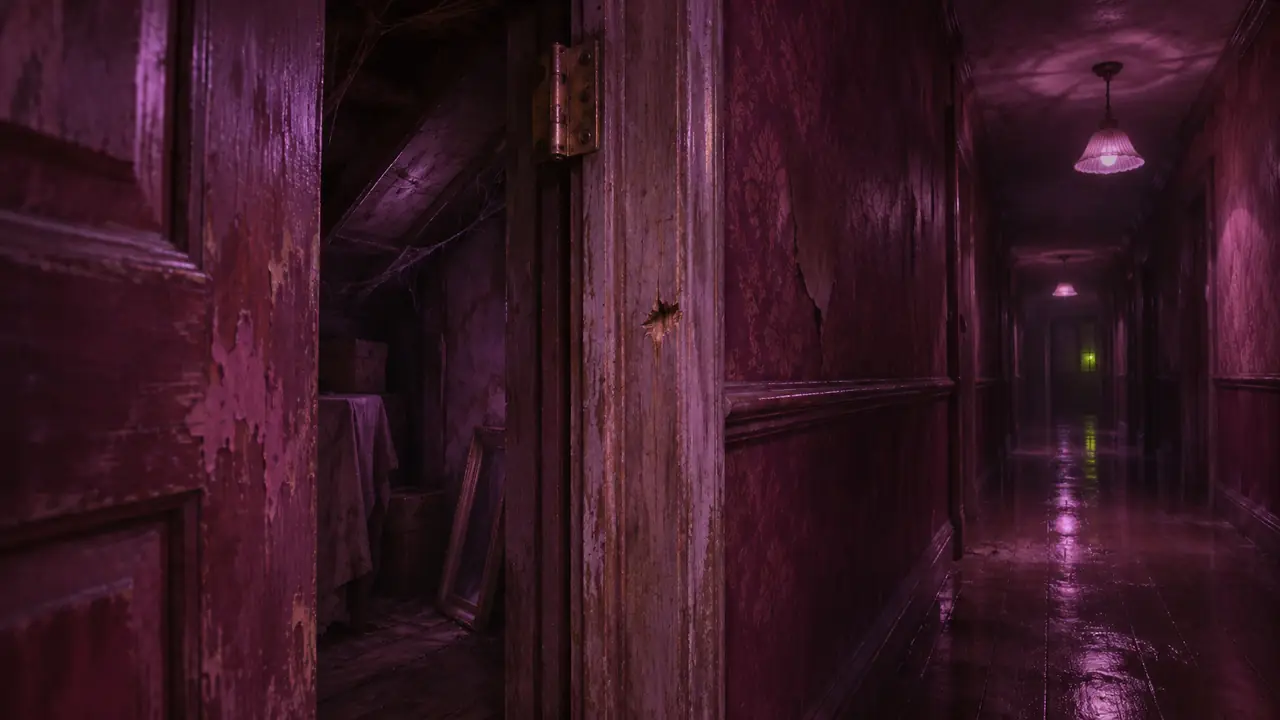
The witness reports opening the same door twice. In one recollection the handle is close to the right wall. In another a sliver of wall is visible on the opposite side. A catch in the movement makes both scenes feel familiar. Same Door Twice is a psychological horror concept about testing that familiarity against the shape of a real corridor.
Walk one section of the corridor
The space begins at a corner and ends at a door with a tall casing. You can step to two places from which the edge of the frame is visible. The opposite wall is too close to let you match every angle, so each position reveals something different. A low defect in the paint can be seen from the turn. The hinge pin only comes into view closer to the threshold. At each stop you can mark an observable part and reopen the short witness account that mentions it.
Once two marks have been recorded, lay the impressions beside each other. Compare where the damaged edge sits in relation to the floor and then decide whether the image was taken from farther down the hall. The reconstruction keeps the observed marks separate from your proposed room identity. You can treat the images as one place for now and retain the other version as an unresolved branch.
Make the architecture the stable reference
The environment art gives texture to surfaces at different heights. A cloudy patch on the varnished floor reflects a low strip of purple light. The casing above it has a notch that reads as a break in the silhouette before its color is distinguishable. When the witness recalls a stronger light than the scene appears to contain, compare the outline and the patch separately. The two observations need not be equally reliable.
The audio emphasizes how the door moves through a tight space. The beginning of the scrape is clear from the hall. Near the hinge side it overlaps with a shorter vibration. It may help identify an extreme angle, but one remembered scrape may be present in both testimony fragments. The comparison keeps its source visible so that it does not quietly become two events.
Keep a branch open after a useful match
A match can establish that one post is shaped like another. A player may still be unable to show that the two visits happened, or even that the witness crossed the threshold. The current exercise lets you keep a match in the saved comparison while withholding that broader conclusion. The next scene is selected through the question you want to inspect, so it is possible to continue without resolving the room identity.
This concept is in prototype development. We are checking whether the casing can be used as a reference on a narrow screen and whether the same mark can be compared across two fragments without losing its place on the door. Read The Doorframe Test for the art decision behind the silhouette or When Repetition Counts Once for the treatment of a recurring scrape. Find the two traces together in the working catalogue.
On a later visit you can clear a saved mark or compare a different one. Revisiting your evidence is part of the sequence. The image changes only when you change where you stand or switch to another fragment.