The Doorframe Test
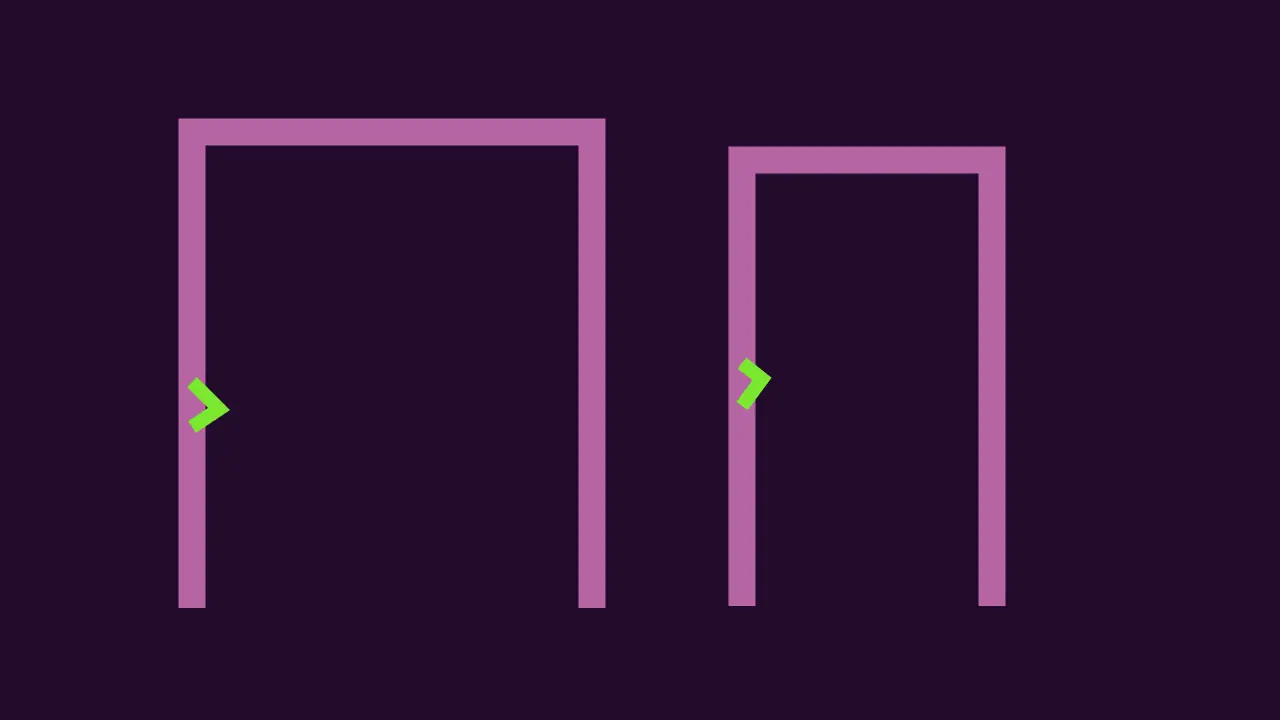
Two versions of the hallway end in a door with a nick in its casing. During the early art pass, we put the nick on the side visible from the first position and added a different chip where the second position could find it. A reader could see something in each scene, but there was no shared feature to test. The marked edges could easily belong to different frames. We redesigned the casing around a question about sight lines.
Pick a mark that can survive a change of angle
The first feature we tried was a spot in the paint. It stood out at the corner and disappeared just before the hinge became visible. The color was being supplied by a reflection that changed with angle. What seemed to be a spot could be produced on more than one piece of trim. It worked as an atmospheric detail and was unreliable as a reference for the current exercise.
The chip that replaced it removes a narrow sliver of the casing at knee height. From the corner you see an interruption in the silhouette. Near the threshold that same feature shows a shallow depression and a tiny line beneath it. The positions show different parts of one shape. In the model, the corner and threshold views are both tied to the same door geometry, so we can check the relation when lighting changes.
Let the hinge supply something new
The hinge is deliberately concealed at the corner. Walking toward the door brings its lower pin into view one edge at a time. We want the player to discover something by moving. They may see enough to rule out a reading in which the door swings toward the opposite wall. This is a separate decision from whether the original account describes approaching the same door twice.
From this closer position the casing has to remain readable. If selecting the hinge hides the chip, the player must remember a detail they could have put beside the new reference. The latest interaction holds both marks in the review view and labels where they came from. You can clear the hinge selection without returning all the way to the corner.
Compare the crops at a usable size
The wide test spread puts the two views side by side. A narrow test stacks them with a short label beside each crop. The same reference remains visible while the reader changes views. Previously the opening used a full corridor illustration in one view and a tight crop of the pin in the other. The chip moved off screen in the second. We now select matching areas for the comparison and keep the wider scene available separately.
The colors help a reader distinguish art and investigation. Purple tones belong to the room. Green indicates a selected observation. The underlying chip stays visible when the marker is hidden. This allows a player to revisit the art on its own and see the detail from the same starting position as someone who has yet to annotate it.
Review the result without completing the story
Same Door Twice uses the casing to ask how one view can be recognised from another position. The casing helps establish a plausible building model. It leaves the number of occasions and the reliability of the recall open. A reader can finish the review with both visits still uncertain and retain the chip identification as useful work.
The next note, When Repetition Counts Once, looks at how a scrape can recur in testimony. The sound cannot be inspected the same way as a geometric feature. The two exercises share the idea that the player should keep access to a reference and know when two impressions may refer to it.