A Clock with Two Readings
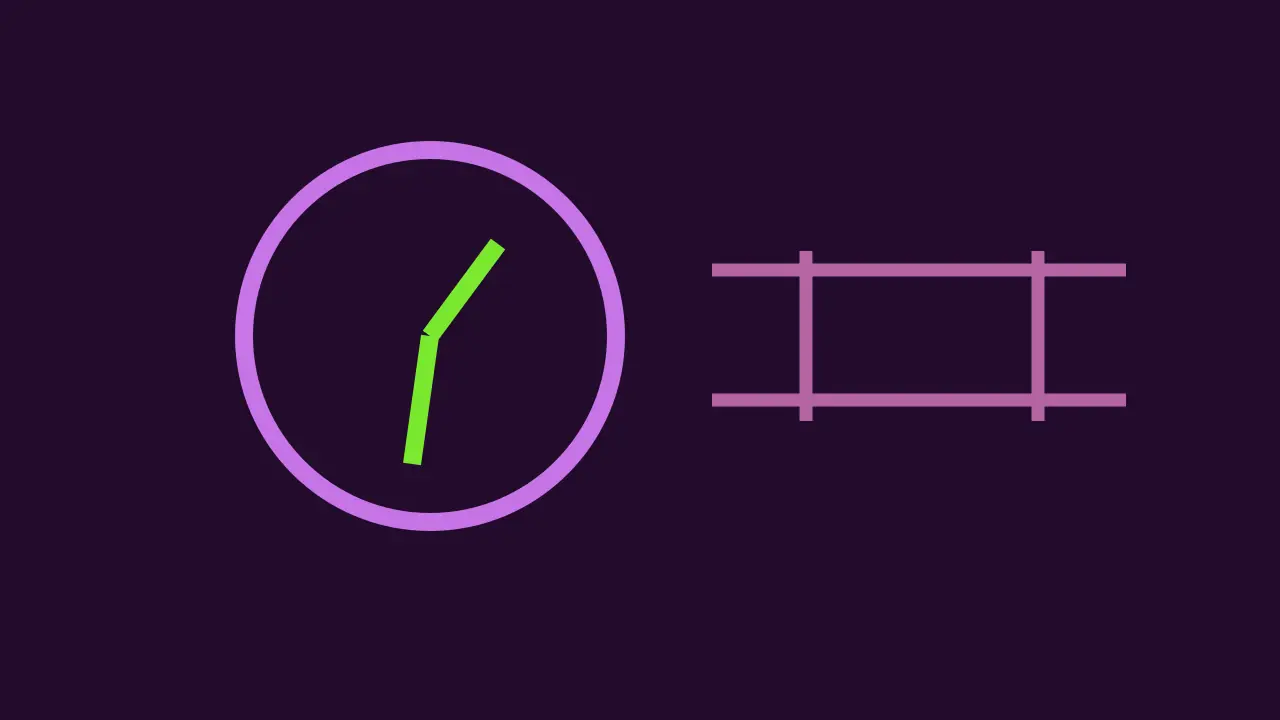
A clock is one of the few objects a witness can describe with apparent precision in a dark hall. Our first reconstruction let the reported reading set the position of every nearby event. The resulting strip was clear enough to scan, but it concealed an interesting question. The witness might remember seeing the hands in that position and still be mistaken about when the sighting happened.
Record the face separately from the claim
Start with a frame showing an analog dial behind glass. The photographer has shifted just far enough that a pale reflection crosses the short hand. The long hand is nearer the bottom of the frame. A player can note the part of the dial that remains visible without putting a complete time on the account. If they choose to add a possible reading, it is displayed alongside the range they could verify.
The witness supplies another value in their own words. That value is accessible even if the image crop proves unreadable at first. We keep the testimony beside the crop and give each an origin. One origin is a remembered description. The other is an observation that the player made while revisiting the image. The reconstruction can place them close together or put them in conflict and still show both labels.
Find a second reference that can move
The stair exercise has a useful candidate near the dial. A thin seam of light crosses a painted riser during one part of the scene. Its arrival helps place the witness in relation to something that changed. It does not explain the dial, and there is no need to make the two observations refer to one absolute time. The current strip lets a reader order the changing seam and the sighting while keeping a separate field for clock readings.
This is easier to examine if the strip shows what led to the placement. A reader can return to the seam or the dial through a plain link in the trace. When we hid the references behind a details menu, some readers left the reconstruction without remembering which one they had used. Keeping a short reference beside the marker made a later revision easier to explain.
Preserve a reading after a revision
A revised strip keeps the original position and the reason it was replaced. This allows a witness to remember a plausible reading that is now placed before a movement they originally described as earlier. The interface shows the associated claim as open for review. Returning the marker to the earlier order brings the original comparison back into view without requiring a fresh visit to all of the relevant frames.
We also check what happens when a reader enters a value from a different recollection. If the labels are legible, it should be possible to notice that a clock from another room has crept into the account. A conflicting value may reveal a useful source relationship. We keep the source title nearby so it can be examined from the place where the discrepancy appears.
Schedule the next observation
The next pass asks the reader to name one thing that would change their placement. A wider view might show who entered the landing while the clock was visible. Another note could establish that a dial was stopped. Neither event has been filled into the test automatically. The exercise is meant to show where an additional observation would help while leaving its result to a future scene.
Read The Sound Before the Drop for the previous revision to event order. The Fall Between Rooms places these questions inside the same stair corridor. A reader can put the strip aside and return to either record later. The time printed on a face should stay available even if their working account of the night changes dramatically.